BUSINESS ENERGY
What is business microgeneration?

Read time: 5 minutes

By Les Roberts, Business Energy Expert
25th June, 2026
Microgeneration is the term used to describe the small-scale production of energy. The most common form of microgeneration centres around businesses that use renewable energy systems to create their own energy cut the costs of buying from a supplier.
But it’s not only about creating energy for your business. You might even be able to sell back excess energy to the National Grid. Put simply, this means you can both save money and make money, all via one microgeneration system.
Business microgeneration is a type of small-scale, on-site energy generation where a business installs renewable technology — such as solar panels, wind turbines, or biomass systems — to produce electricity or heat for its own use, typically at an output of 5 MW or less for electricity and 45 kWth or less for heat.
In this guide to business microgeneration…
- What is business microgeneration? How does it work, and how can it help reduce your energy bills?
- Find out which microgeneration technologies are available to UK businesses and how to choose the right one for your location and premises.
- Discover what government schemes exist to support businesses that generate their own renewable energy, including the Smart Export Guarantee (SEG).
- The key advantages and disadvantages of microgeneration, to help you make an informed decision about whether to invest.
Why consider business microgeneration?
Microgeneration offers businesses of all sizes many wide-ranging benefits. Most importantly, it can help you lower your business energy bills. Microgeneration can also help you promote your business as a forward-thinking, socially conscious enterprise - allowing for alternative marketing angles and helping to attract new customers.
Now that most countries have signed up to the Paris Agreement - a global treaty aimed at lowering greenhouse gases - many governments have created incentives for businesses looking to go green. For example, in the UK, microgeneration can allow your business to skip certain taxes, such as the Climate Change Levy, receive subsidies on your energy bills and access a range of funding schemes for installing renewable energy technology. This funding is mostly available under the Non-Domestic Renewable Heat Incentive (RHI).
Microgeneration can also help your business avoid rising energy prices and market volatility. If you qualify for the Smart Export Guarantee, you'll also be able to make money by selling energy back to the National Grid.
According to the Microgeneration Certification Scheme (MCS), 2024 was a record-breaking year for small-scale renewables in the UK, with more than 260,000 certified installations completed across homes and small businesses. That's a 7% increase on the previous year, taking the cumulative total past 2 million installations.
At a national level, renewable electricity generation in the UK reached a record 143.7 TWh in 2024. This accounts for half (50.4%) of total electricity generation, and is up from previous years.
What is the Smart Export Guarantee?
The Smart Export Guarantee (SEG) is a government scheme designed to ensure that households and businesses that generate renewable energy are paid for the electricity they export to the grid. It was introduced in January 2020 to replace the Feed-In Tariff, which closed to new applicants back in March 2019.
It requires licensed electricity suppliers with 150,000 or more domestic customers to offer businesses and households a payment rate for surplus renewable electricity exported to the National Grid. SEG rates vary by supplier and are set by the market rather than the government.
To qualify for the SEG, you need to have renewable energy technologies like:
- Solar panels
- Wind turbines
- Hydroelectric systems
- Anaerobic digestion
- Micro combined heat and power (micro-CHP)
For micro-CHP systems, your electricity capacity must be 50 kW or less. For other technologies, the capacity must be 5 MW or less.
To find out whether your system is eligible and for more information on how to sign up for the scheme, check out our guide to the Smart Export Guarantee.
What is the Renewable Heat Incentive?
The Renewable Heat Incentive (RHI) was a government initiative designed to incentivise businesses, homeowners, and communities to invest in renewable heat technology.
The Non-Domestic RHI (for businesses) closed to new applicants on 31 March 2021, and the Domestic RHI closed on 31 March 2022.
If your business applied before the scheme closed, you may still be receiving payments over a 20-year period, depending on when you joined.
No new applications are accepted under either scheme.
What has replaced the RHI for businesses?
There is currently no direct replacement for the Non-Domestic RHI, but the UK Government's Heat and Buildings Strategy includes schemes such as the Boiler Upgrade Scheme, which offers upfront grants for heat pump and biomass boiler installations in England and Wales.
The Green Heat Network Fund, which supports low-carbon heat networks. Businesses should check the Government website for details on how to apply.
If you applied to the RHI before it closed, your payments will have been based on a variety of factors, including:
- The technology you use
- The tariffs available at the time of application
- The metering system used to record your generation.
You can find out more via the RHI payment calculator.
What methods of business microgeneration are available?
There are plenty of methods for microgeneration, however, not all will be suitable. Instead, it’s worth considering which type of renewable energy system will be most beneficial to your business. This is usually centred around your location and the types of power you have access to – for example, solar or wind.
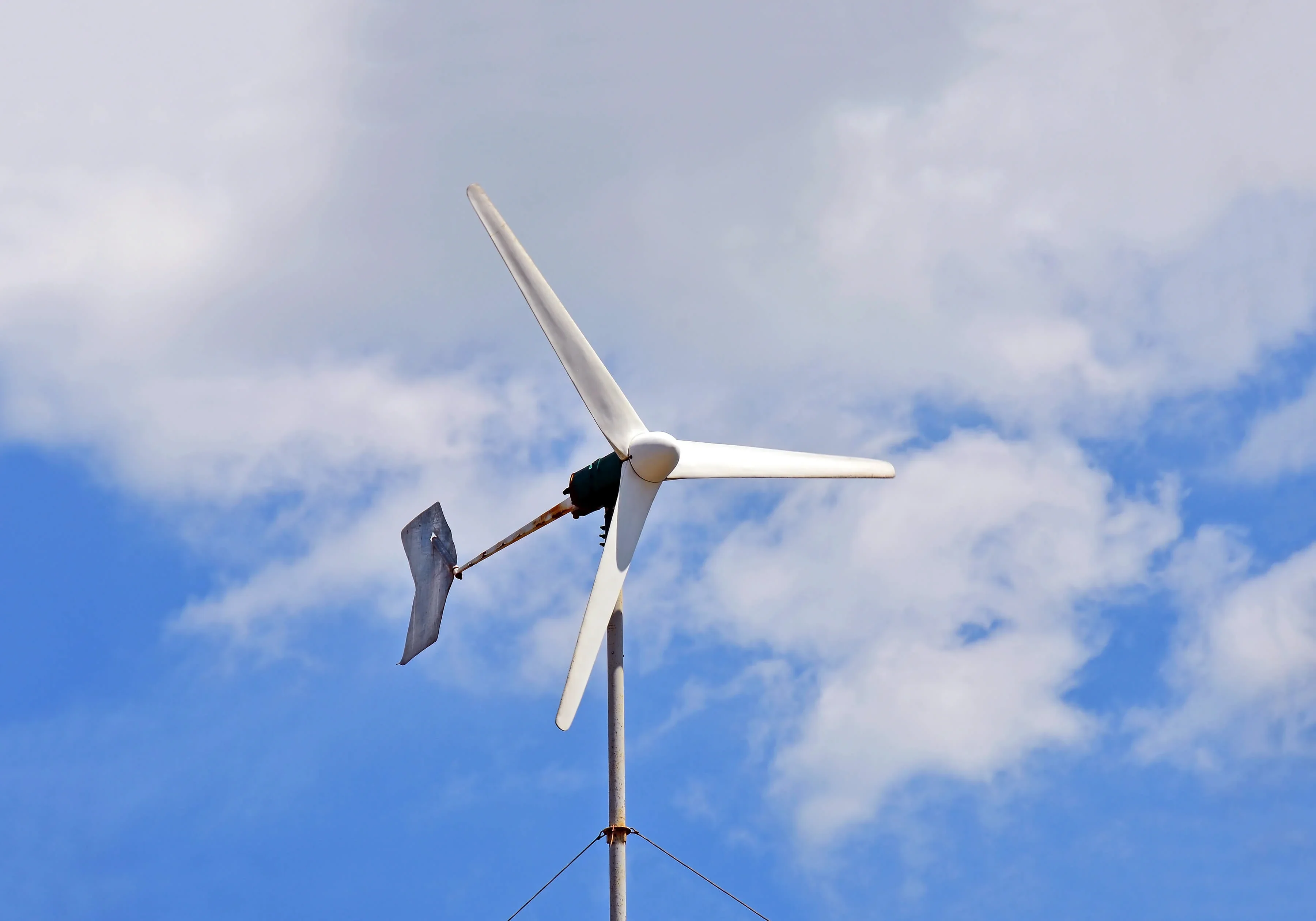
Small-scale wind power
Small-scale wind power is a type of microgeneration technology where a turbine with an output typically below 50 kW is installed on or near business premises to convert wind energy into electricity for on-site use or export.
It’ll come as no surprise that the UK is one of the leading nations for wind power. That said, wind power is only really suitable for businesses located in exposed areas where the average wind speed is 6mph or more.
As turbines are usually large and noisy, they can cause complaints from those in the local area. Despite their size, there are certain turbines ready for installation without planning permission – just be aware, these are subject to very stringent conditions.
Hydro power
Hydroelectric microgeneration is a type of small-scale power generation that uses the flow or fall of water to drive a turbine and produce electricity. It is highly location-dependent and typically requires proximity to a river, stream, or water course with sufficient flow.
To access a hydro-powered renewable energy system, you need access to a water source powerful enough to turn a turbine to create electricity. What’s more, you’ll most likely need planning permission before installation.
Solar PV
Solar photovoltaic (solar PV) microgeneration is a type of renewable energy system that uses panels containing photovoltaic cells to convert sunlight directly into electricity.
For businesses, solar PV can be installed on rooftops or as ground-mounted arrays, with system sizes typically ranging from a few kilowatts for smaller premises up to several hundred kilowatts for larger commercial sites.
Although systems work best in full sun conditions, they can still be used in areas where sunny weather is less common. For example, 50% of all UK solar PV energy is sent back to the national grid. This means you could be making money on 50% of your electricity production, while the rest is used for your own needs.
Solar panels for business will typically be installed on your roof or as ground-mounted arrays, depending on the direction your building faces and the available space.
Solar thermal
Solar thermal microgeneration is a type of renewable heat system that uses roof-mounted collectors to absorb heat from the sun and transfer it to a hot water cylinder, reducing a business's need for gas or electric water heating. It is distinct from solar PV, which generates electricity rather than heat.
The majority of solar systems create steam, which is turned into mechanical energy that creates electricity to be used or sold back to your supplier.
Biomass
Biomass microgeneration is a type of renewable energy system that generates heat or electricity by burning or processing organic materials, such as wood pellets, food waste, or agricultural by-products. Businesses must ensure that biomass fuel and equipment meet MCS certification standards to be eligible for any applicable government schemes.
Also known as Anaerobic Digestion, the downside of biomass microgeneration is the cost involved in installation. However, as with all renewable energy systems, there are different options for funding, such as the Green Investment Bank.
What are the pros and cons of business microgeneration?
As with any tech, there are pros and cons, and suitability will depend upon your needs and budget. Here are some of the main advantages and disadvantages.
The advantages of microgeneration
Despite the initial outlay, new microgeneration is widely considered a low-risk investment. With funding schemes, FiT payments and lower future bills, they offer businesses of all sizes the chance to save money by producing their own electricity. But the advantages don’t just stop there.
Since the turn of the century, and especially of late, customers are now increasingly drawn to companies that favour renewable energy for a greener world. By choosing business micro generation, you can tap into these demographics, potentially gaining a wider customer base than you currently have.
Another advantage is that business microgeneration helps make the grid more reliable and secure, with energy coming from various locations.
Businesses that generate their own energy may also benefit from reduced exposure to wholesale energy price volatility. By generating a portion of their energy on-site, your businesses can lower the amount it needs to buy from the grid. This can help to insulate you from future price increases.
The disadvantages of microgeneration
While the advantages of microgeneration are clear, you will also want to know about the drawbacks.
The biggest concern relates to the national grid. Some researchers worry that the grid may not be able to manage a large-scale uptake in distributed energy without significant upgrades. Ofgem is actively encouraging Distribution Network Operators (DNOs) (the companies responsible for regional electricity distribution) to take a greater role in energy management.
It is also important to note that some providers have historically sold microgeneration systems that were not viable for the businesses to whom they were sold. There have also been cases of misleading claims, usually centred around potential savings.
Upfront installation costs can be significant. Solar PV systems for commercial premises can cost tens of thousands of pounds, depending on system size, and the payback period will vary depending on your energy usage, the technology chosen, and available export rates. Always seek quotes from MCS-certified installers before committing.
How to set up new microgeneration for your business
When considering business micro generation, your first step is to decide which energy generation system will have the greatest impact. Then, you’ll need to certify your system through the Microgreneartion Certification Scheme (MCS) and also have it installed by a certified installer.
The Microgeneration Certification Scheme (MCS) is a type of quality assurance framework that certifies both microgeneration products and the installers that fit them. MCS certification is typically required for a system to be eligible for government export schemes such as the Smart Export Guarantee. Choosing an MCS-certified installer helps ensure your system meets UK quality and safety standards.
Visit the MCS website for more information.
Another useful resource is microgeneration.com, which lists some other considerations for businesses looking at new microgeneration. If you’re still unsure or need some further advice on how you can invest, consider doing the following first:
- Analyse your business electricity and gas consumption and work out how to lower your energy usage.
- Research the types of outputs your preferred source of green energy can produce. This will help you understand what savings can be made and whether or not you’ll be able to sell any excess energy back to your supplier via FiT.
- Consider your location. Do you have spare land? What will your neighbours think about a microgeneration system being installed? Is your building old or new? Are there any small changes you could make to improve your efficiency?
You may also want to consult a qualified energy advisor or broker who can help you model the financial case for microgeneration at your specific premises. MoneySuperMarket helps you compare business energy deals from a panel of suppliers. Whether you go down the microgeneration route or not, you can ensure you're on a competitive tariff in the meantime.
Finally, if microgeneration does sound like something you want to invest in, you should be open to changing some of your energy habits. To get the greatest impact from business microgeneration, you will need to change your habits. This doesn’t involve any huge shifts, but little changes to your practice will enable you to maximise the output of your system, save money, and often make extra money too.
Take control of your business energy bills
Creating your own energy isn't the only way to take control of your energy bills. Fixing your rates means you know exactly how much you pay for the energy you use. Call our energy experts now on 0800 140 4667 or give us your postcode to start a business energy price comparison.
Business microgeneration FAQs
Still unsure about microgeneration? Check out the answers to our most frequently asked questions.
What is the difference between solar PV and solar thermal for businesses?
Solar PV (photovoltaic) panels convert sunlight into electricity, which your business can use to power equipment, lighting, and other electrical loads. Solar thermal systems, by contrast, capture heat from the sun to warm water, reducing your reliance on gas or electric water heating.
Both can help cut energy costs, but they serve different purposes — solar PV is the more versatile option for most businesses, while solar thermal works best where there is a consistent demand for hot water, such as in hospitality or manufacturing.
Can I get a grant to install solar panels on my business premises?
There is currently no dedicated grant scheme specifically for commercial solar panel installation in the UK. But businesses may be able to access financing support through schemes such as the UK Shared Prosperity Fund, local authority grants, or green business loans offered by some banks and lenders.
You may also benefit from the Smart Export Guarantee (SEG), which pays you for surplus electricity your panels export to the National Grid. It is worth checking with your local council and the GOV.UK website for any regional or sector-specific support that may be available.
How long does it take to install a microgeneration system?
Installation timescales vary depending on the technology and the size of your system. A straightforward commercial solar PV installation could be completed in one to three days, while more complex systems, such as wind turbines or biomass boilers, may take several weeks, particularly if planning permission is required.
You should also allow time for MCS certification, grid connection applications, and any building surveys before work begins. Your installer should be able to provide a realistic project timeline at the quotation stage.
Is microgeneration worth it for small businesses or sole traders?
It can be, but it depends on your energy usage, premises, and budget. Businesses with higher daytime electricity consumption, such as workshops, retail units, or cafés, are typically better placed to benefit from solar PV, as they can use more of what they generate.
For smaller businesses or sole traders with low energy demand or rented premises, the upfront cost may be harder to justify. Using a comparison service like MoneySuperMarket to fix your business energy tariff could deliver quicker savings with no capital outlay, and the two approaches are not mutually exclusive.
What happens if my microgeneration system produces more energy than I use?
Any surplus electricity your system generates can be exported to the National Grid. If your system is MCS-certified and meets the eligibility criteria, you could register for the Smart Export Guarantee (SEG), under which your energy supplier pays you for every unit of electricity you export. SEG rates are set commercially by suppliers rather than the government, so it is worth comparing rates before choosing a provider.
Surplus heat from thermal systems cannot currently be exported in the same way, so sizing your system correctly for your actual demand is important.
Are there any tax benefits to installing microgeneration for my business?
Potentially, yes. Businesses may be able to claim capital allowances on the cost of installing a microgeneration system, reducing their taxable profit in the year of purchase. Enhanced Capital Allowances (ECAs) have previously applied to certain energy-efficient technologies, though the rules around these have changed over time.
It is advisable to speak to a qualified accountant or tax adviser to understand what reliefs may currently apply to your specific situation, as tax treatment can vary depending on the technology, business structure, and wider financial circumstances.
What is the lifespan of a commercial solar panel system?
Most commercial solar PV panels are designed to last 25 to 30 years, with many manufacturers offering performance warranties guaranteeing panels will still produce at least 80% of their rated output after 25 years. Inverters, which convert the DC electricity generated by panels into usable AC electricity, typically need replacing after 10 to 15 years.
Regular maintenance and occasional cleaning can help maximise output over the system's lifetime. Over a 25-year period, a well-sized commercial solar installation could generate significant savings relative to its initial cost.
How do I find an MCS-certified installer in my area?
You can search for MCS-certified installers using the postcode search tool on the MCS website at mcscertified.com.
MCS certification is the UK's quality standard for small-scale renewable energy installations, and using a certified installer is typically a requirement for accessing schemes such as the Smart Export Guarantee. Always obtain at least two or three quotes before proceeding, and check that the installer holds valid MCS certification for the specific technology you are looking to install.
Is it time to compare business energy quotes and switch?
Take the hassle out of sorting your next energy deal. We compare from a panel of suppliers. You choose the rates that are right for your business.
By clicking ‘COMPARE TODAYS RATES’ you agree for us to search your current energy supplier and usage though industry held data. Enter manually
Our experts share essential knowledge on business energy







All related guides
View all energy guides
- A complete guide to business energy for offices
- A complete guide to business energy for restaurants
- A complete guide to business energy for shops
- Average business energy consumption - How much does your business use?
- How to get a business energy audit to save money and boost efficiency
- A complete guide to business energy bills
- Business energy brokers – everything you need to know
- What are no standing charge business energy tariffs?
- Business energy efficiency: how to save energy at your business
- Business energy price trends UK 2026
- How is business energy different to household energy?
- Change of Tenancy - Moving business premises and your energy contract
- Commercial property landlord energy advice
- Energy performance certificate for business
- Fixed vs variable business energy contracts
- A complete guide to half hourly electricity meters
- How does the energy market affect the cost of your energy bills?
- How switching to energy efficient lighting can save your business money
- How to pay your business energy bills to save money and avoid late fees
- How to reduce business energy costs
- How your business credit score affects your energy deals
- Compare large and industrial business energy prices
- Non-Commodity Costs & TNUoS/DUoS Charges: What Every UK Business Needs to Know in 2026
- Prepayment meters for business: The complete 2025 guide for SMEs
- What are renewable energy certificates and REGOs for small businesses?
- Renewable Energy for Business
- Business Smart Meters: Your Guide to Savings, Installation, and Supplier Comparison
- Commercial solar panel electricity
- The nuclear RAB levy explained: what it means for your business
- A business guide to time-of-use energy tariffs
- Deemed and Out-of-Contract Rates. What happens when your fixed rate business energy contract ends?
- Business energy tariffs explained
- Everything you need to know about the Smart Export Guarantee (SEG)
- A guide to small business energy and micro business energy
- UK business energy suppliers: who are they and what do they offer?
- What is the Climate Change Levy?
- Business energy meter installation: Your complete guide
- Multi-site meters and business energy management
- How much is VAT on business energy?
- What affects gas prices for UK businesses?
- What happens when your energy supplier goes bust?
- What is a letter of authority (LoA) for business energy?
- What is Market-wide Half-Hourly Settlement (MHHS) and how does it work?
- What is business microgeneration?
- When should you switch business energy?
- Why is business energy so expensive?
How to switch business energy suppliers with MoneySuperMarket
We can switch your business to a better energy deal in three simple steps
1
We find your details
Just enter your business address and we'll use industry data to accurately find and understand your energy usage.
2
We talk through your quotes
One of our UK-based energy experts will search our supplier panel and give you a call to talk through your quotes.
3
You choose the deal you want
With all the information to hand, you choose the deal that best suits your business and we’ll handle the switch for you.
Compare today’s business energy rates
By clicking ‘COMPARE TODAY'S RATES’ you agree for us to search your current energy supplier and usage though industry held data. Enter manually

If you don’t complete the form we may use your details to understand what went wrong or to promote our products or special offers. We may contact you by phone or email.
Contact MoneySuperMarket.com at MoneySuperMarket House, St David's Park, Ewole, Flintshire, CH5 3UZ. © MoneySuperMarket.com Ltd 2013.
Moneysupermarket.com Limited is an appointed representative of Moneysupermarket.com Financial Group Limited ©, which is authorised and regulated by the Financial Services Authority (FSA FRN 303190). Moneysupermarket.com Financial Group Limited, registered in England No. 3157344. Registered Office: Moneysupermarket House, St. David's Park, Ewloe, CH5 3UZ. Telephone 01244 665700.
Important Information
Here's some important information about the services MoneySuperMarket provides. Please read and retain for your own records. About our service


We use cookies to ensure you have the best experience on our website. Cookie Policy