BUSINESS ENERGY
What is Market-wide Half-Hourly Settlement (MHHS) and how does it work?

Read time: 5 minutes

By Les Roberts, Business Energy Expert
6th January, 2026
Market-wide Half-Hourly Settlement (MHHS) is an Ofgem-led programme that changes how electricity is billed in the UK. Instead of relying on estimated usage or daily smart meter data, suppliers will use half-hourly meter readings to charge customers for the electricity they actually use.
This will apply to both domestic and non-domestic meters. As well as accurate billing for customers, half-hourly metering will help ensure suppliers are compensated or charged for any shortfalls or excesses in their contracted electricity.
It should ensure households and businesses are billed fairly, based on real-time energy use, and will run alongside the ongoing smart meter rollout. If you don't have a smart meter, the half-hourly settlement will be based on annual consumption estimates and property type.
Here's all you need to know.

In this guide to Market-wide Half-Hourly Settlement (MHHS)...
- We explain Market-Wide Half-Hourly Settlement (MHHS) – A major UK electricity market reform that settles all usage in 30‑minute periods using half‑hourly data instead of estimates.
- How MHHS changes billing and settlement – Explains how suppliers match what they buy on the grid to what businesses actually use each half hour, improving accuracy and reducing reliance on profiles.
- Why MHHS matters for Net Zero and the grid – Shows how granular data supports time‑of‑use tariffs, flexibility, and better integration of renewables to cut carbon and peak demand.
- What MHHS means for business customers – Outlines who is affected, the role of smart/AMR meters, and what might change on bills, MPANs and tariff options.
- When MHHS is being rolled out and key milestones – Covers Ofgem’s timeline for industry testing, customer migration and the target dates by which half‑hourly settlement will apply across the market.
Why is energy settlement important?
Energy settlement is the process of matching the amount of electricity suppliers buy from generators with the amount of energy customers use. This has often relied on estimates, especially for homes and smaller businesses without half-hourly meters, which can lead to inaccurate billing.
MHHS ensures that usage is accounted for every half hour, making bills more reflective of actual consumption and helping suppliers and generators balance the grid.
What is changing under MHHS?
By 2027, all domestic and business electricity supply points will be settled using half-hourly data. This shift involves rolling out smart meters where possible and updating industry systems. But you don't need a smart meter to benefit from half-hourly metering, as we explain below.
Here's a breakdown of how it will work:
- If you already have a smart meter, it will automatically provide half-hourly data.
- If you do not have a smart meter, your usage will still be settled half-hourly based on estimates considering your annual consumption and property type until you upgrade.
- Energy suppliers, brokers, and comparison tools are updating their systems to handle industry changes like new settlement codes and the phasing out of old profile classes.
- Consumers will see new information and terminology on their energy bills and contracts as part of this transition.
What are the benefits of market-wide half-hourly settlement?
MHHS aims to modernise the UK energy market and provide a range of benefits for both domestic and non-domestic energy users.
Benefits for all energy users
- More accurate billing: Electricity bills will more closely reflect the energy you use, reducing reliance on estimates or outdated meter readings.
- Greater transparency: You’ll receive near-real-time billing updates, making energy costs more predictable and easier to manage.
- Increased tariff choice: Suppliers are incentivised to create innovative tariffs, including time-of-use tariffs and dynamic pricing, meaning you may be able to save money by shifting usage to off-peak times.
- Support for net zero: With more granular data, the system can use renewable energy more effectively and reduce waste, helping the UK meet its environmental targets.
Benefits for business energy users
- Cost control: Businesses, especially those with flexible or shift-based energy needs, can save by shifting consumption to cheaper periods.
- Procurement advantage: Detailed consumption data allows businesses and business energy brokers to negotiate better energy contracts and participate more actively in demand flexibility or grid balancing schemes.
- Streamlined admin: Billing and contract information will gradually become simpler, as old profile classifications are phased out.
Benefits for domestic energy users
- Personalised tariffs: Time-of-use pricing and upcoming innovations will make it easier for households to control bills and take advantage of cheaper rates.
- Preparation for a smarter future: Smart meters and MHHS pave the way for home battery storage, electric vehicles, and better tools for managing your home’s energy footprint.
What is the MHHS rollout timeline?
The testing phase has been underway since 2024. Here are the key MHHS dates to look out for:
- September 2025: Supply points across the UK start moving to MHHS. This should take about 18 months.
- October 2026: All domestic and business electricity customers are expected to be on use half-hourly settlement.
- May 2027: The new system is fully operational, supported by Ofgem, Elexon and energy suppliers.
Businesses with high electricity demand may already use half-hourly meters, but MHHS ensures all companies are included. Households with smart meters will automatically be migrated to half-hourly settlement.
During this period, you may see changes to your bills, new contract terms, and notifications from your supplier or broker.
How does MHHS impact your bills and contracts?
Although you don't need to do anything and probably won't notice much of a difference apart from more accurate bills and no need to send meter readings, there are a few things to look out for.
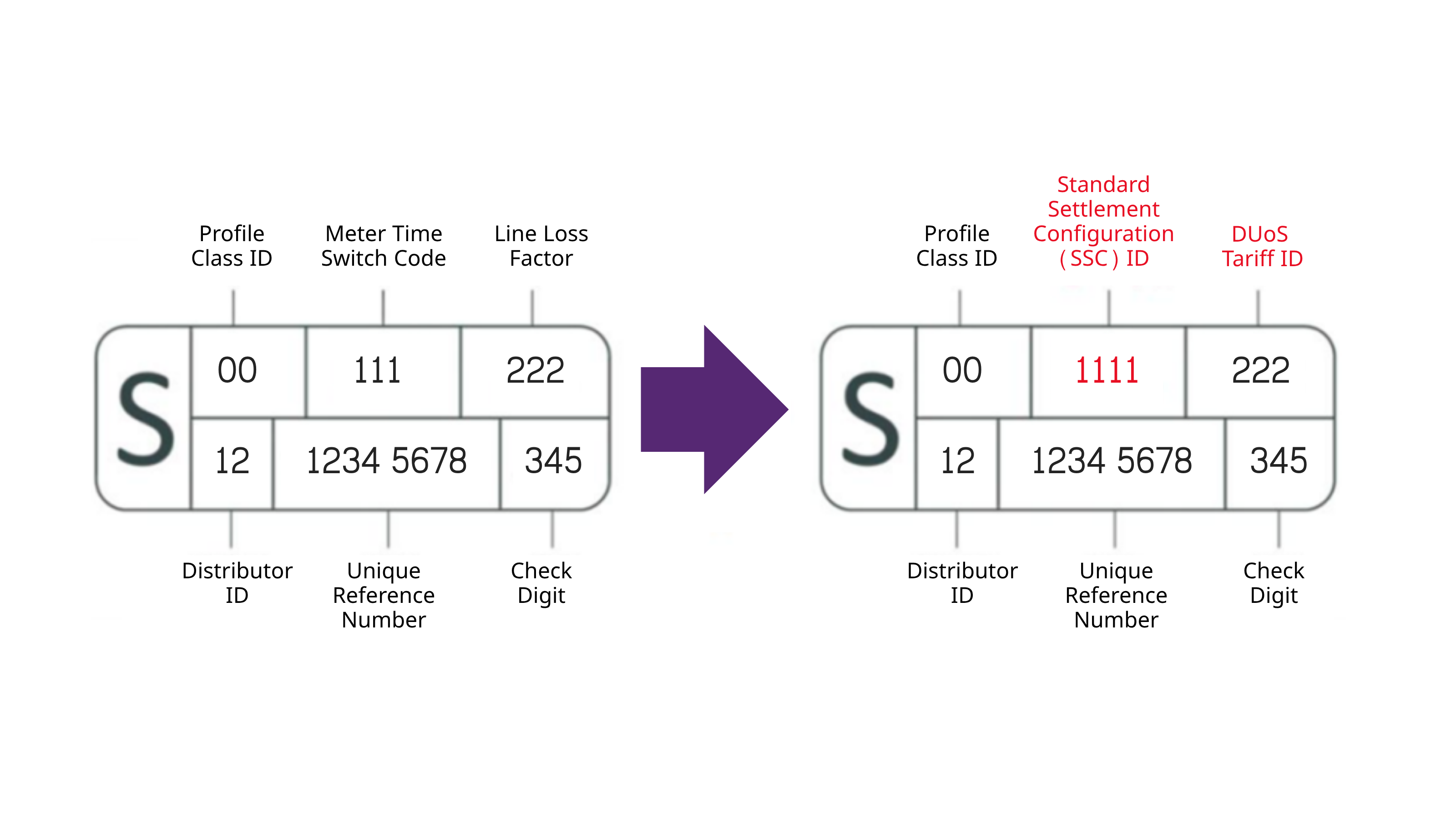
- Your MPAN (the reference number for your meter) may change; old codes are being replaced with new identifiers suitable for half-hourly data.
- Profile class information will disappear for migrated meters.
- Expect clearer, more precise contract wording and options to access new tariffs.
- The settlement window (the time suppliers have to balance and pay for your usage) will shorten, making the system more responsive and transparent.
Here's how MPAN numbers will change under MHHS:
Why is the UK moving to MHHS?
MHHS is designed to modernise the energy system, improve billing fairness, and promote smarter, greener energy usage. Here are some of the ways the scheme plans to do that:
- It helps balance supply and demand at a national level, making better use of renewable sources and flattening expensive peak demand periods.
- Innovation will follow, with suppliers and technology providers offering new services and savings linked to how and when you use electricity.
- Ofgem estimates net benefits for UK consumers between £1.6 billion and £4.5 billion by 2045 from improved efficiency, transparency, and grid flexibility.
How to prepare for market-wide half-hourly settlement
The rollout is happening now and is fully automated, so you don't need to do anything to switch to half-hourly metering (though installing a smart meter may help). Even so, here are some things to consider:
- Check your meter: Make sure you have a smart meter. If not, contact your supplier about an upgrade to unlock the most benefits.
- Review your tariff: Ask about time-of-use or flexible tariffs that could help you save money.
- Stay informed: Look out for updates from your supplier or broker about how your bills and contracts might change. Compare business energy quotes to find more cost-effective deals as the market evolves.
Market-wide half-hourly settlement (MHHS) FAQs
Still unsure about what MHHS means for your business? Check out the answers to our most frequently asked questions.
What is Market-wide Half-Hourly Settlement (MHHS)?
MHHS is a UK energy market reform that will settle all electricity using half-hourly (every 30 minutes) meter data instead of estimates, making bills more accurate.
Why is MHHS being introduced?
MHHS is being introduced to create a smarter, more flexible electricity system that supports net zero by matching what suppliers buy with what customers actually use each half hour.
Who will MHHS affect?
MHHS will eventually affect all electricity customers, including homes and businesses, once their meters are settled using half-hourly data.
Do I need a smart meter for MHHS?
A smart or advanced meter that can record and send half-hourly usage data automatically is preferred, but you'll still be able to get half-hourly settlement without one.
How could MHHS change my energy bills?
MHHS should make bills more reflective of actual usage and may enable cheaper tariffs if you can shift consumption to off‑peak times.
Will MHHS happen automatically or do I need to sign up?
MHHS is a mandatory industry-wide change that will largely happen in the background, with your supplier moving you onto half-hourly settlement over time.
When will MHHS be in place?
The migration to MHHS started in 2025 and is due to be completed by 2027, after which all meters should be settled half‑hourly.
What are the main benefits of MHHS for businesses?
Businesses can gain more accurate cost allocation, clearer insight into usage patterns, and access to innovative time‑of‑use and flexibility tariffs that can cut costs and carbon.
Is it time to compare business energy quotes and switch?
Take the hassle out of sorting your next energy deal. We compare from a panel of suppliers. You choose the rates that are right for your business.
By clicking ‘COMPARE TODAYS RATES’ you agree for us to search your current energy supplier and usage though industry held data. Enter manually
Our experts share essential knowledge on business energy







All related guides
View all energy guides
- A complete guide to business energy for offices
- A complete guide to business energy for restaurants
- A complete guide to business energy for shops
- Average business energy consumption - How much does your business use?
- How to get a business energy audit to save money and boost efficiency
- A complete guide to business energy bills
- Business energy brokers – everything you need to know
- What are no standing charge business energy tariffs?
- Business energy efficiency: how to save energy at your business
- Change of Tenancy - Moving business premises and your energy contract
- Commercial property landlord energy advice
- Energy performance certificate for business
- A complete guide to half hourly electricity meters
- How does the energy market affect the cost of your energy bills?
- How switching to energy efficient lighting can save your business money
- How to pay your business energy bills to save money and avoid late fees
- How your business credit score affects your energy deals
- Compare large and industrial business energy prices
- Prepayment meters for business: The complete 2025 guide for SMEs
- What are renewable energy certificates and REGOs for small businesses?
- Renewable Energy for Business
- Business Smart Meters: Your Guide to Savings, Installation, and Supplier Comparison
- Commercial solar panel electricity
- The nuclear RAB levy explained: what it means for your business
- A business guide to time-of-use energy tariffs
- Business energy tariffs explained
- Everything you need to know about the Smart Export Guarantee (SEG)
- Compare small business & micro business energy prices
- Compare the cheapest business energy suppliers
- What is the Climate Change Levy?
- Business energy meter installation: Your complete guide
- Multi-site meters and business energy management
- How much is VAT on business energy?
- What happens when your energy supplier goes bust?
- What is a letter of authority (LoA) for business energy?
- What is Market-wide Half-Hourly Settlement (MHHS) and how does it work?
- What is business microgeneration?
How to switch business energy suppliers with MoneySuperMarket
We can switch your business to a better energy deal in three simple steps
1
We find your details
Just enter your business address and we'll use industry data to accurately find and understand your energy usage.
2
We talk through your quotes
One of our UK-based energy experts will search our supplier panel and give you a call to talk through your quotes.
3
You choose the deal you want
With all the information to hand, you choose the deal that best suits your business and we’ll handle the switch for you.
Compare today’s business energy rates
By clicking ‘COMPARE TODAY'S RATES’ you agree for us to search your current energy supplier and usage though industry held data. Enter manually

If you don’t complete the form we may use your details to understand what went wrong or to promote our products or special offers. We may contact you by phone or email.
Contact MoneySuperMarket.com at MoneySuperMarket House, St David's Park, Ewole, Flintshire, CH5 3UZ. © MoneySuperMarket.com Ltd 2013.
Moneysupermarket.com Limited is an appointed representative of Moneysupermarket.com Financial Group Limited ©, which is authorised and regulated by the Financial Services Authority (FSA FRN 303190). Moneysupermarket.com Financial Group Limited, registered in England No. 3157344. Registered Office: Moneysupermarket House, St. David's Park, Ewloe, CH5 3UZ. Telephone 01244 665700.
Important Information
Here's some important information about the services MoneySuperMarket provides. Please read and retain for your own records. About our service


We use cookies to ensure you have the best experience on our website. Cookie Policy